What Is the Skin Barrier — and Why Does It Matter More After Menopause
Your skin barrier is a wall of bricks and mortar, and menopause quietly dismantles the mortar, here's what's actually happening and how to rebuild it.
“Skin barrier” is one of those phrases that gets used constantly in skincare without anyone really explaining what it means. It’s invoked for everything from dryness to sensitivity to premature aging — which is accurate, actually, but not very helpful unless you understand what the barrier actually is and what it does. Once you do, a lot of things about midlife skin start to make a different kind of sense.
What it actually is
The skin barrier isn’t a single layer or a membrane. It’s a carefully organized structure within the outermost layer of skin — the stratum corneum — that controls what moves in and out of the body.
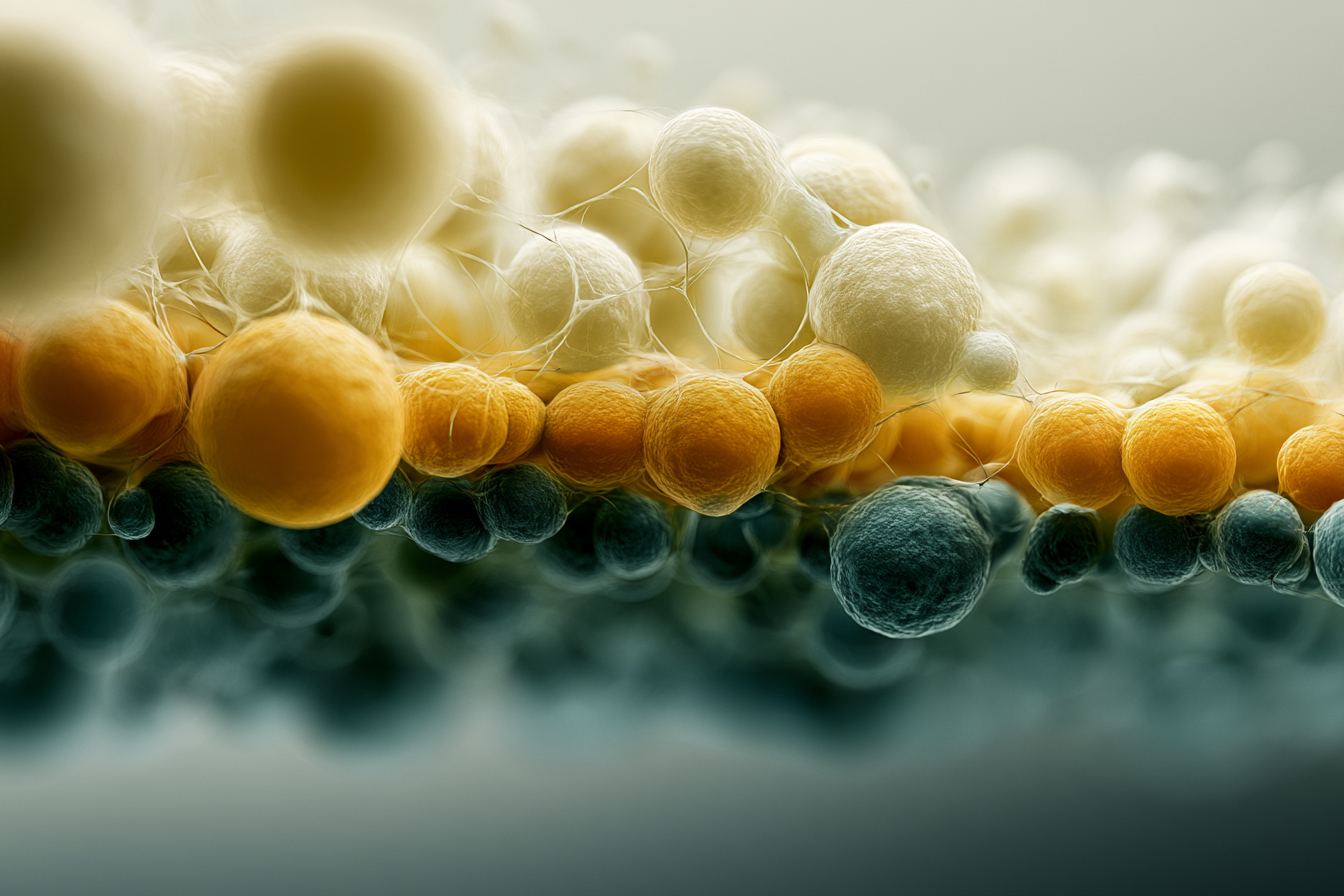
The classic analogy is bricks and mortar. The bricks are flattened skin cells. The mortar between them is a precisely layered mix of lipids — ceramides, cholesterol, and fatty acids — arranged in a way that makes the barrier both flexible and effectively impermeable.
That lipid matrix does two things at once: it keeps moisture inside the skin and blocks environmental stressors from getting in. When it’s intact and well-organized, both functions work well. When it becomes depleted, moisture escapes more readily and skin becomes drier, more reactive, and less able to maintain itself.
Keep moisture in, keep stressors out. That’s the barrier’s job — and in midlife, both sides of that equation come under pressure at once.
The three lipids doing the work
The lipid matrix has a specific composition — roughly half ceramides, a quarter cholesterol, and the rest fatty acids. The ratio matters as much as the individual ingredients.
Ceramides form the backbone of the structure. They’re the most abundant lipid in the barrier, and they also signal the production of new barrier lipids, making them central to how the barrier renews and repairs itself over time.
Cholesterol keeps the matrix fluid and adaptable. Without enough of it, the barrier becomes rigid and less able to respond to the demands of daily life — temperature changes, movement, environmental exposure. It’s what gives well-supported skin that sense of suppleness.
Fatty acids maintain the mildly acidic surface environment that allows the enzymes involved in barrier renewal to function. A healthy fatty acid profile keeps the skin’s surface stable — the right conditions for repair to keep happening on its own.
Supporting all three together, rather than ceramides alone, is what produces lasting barrier reinforcement. The structure depends on the balance.
What shifts in midlife
Estrogen has a direct influence on how the skin produces barrier lipids. Estrogen receptors are present in the skin cells responsible for lipid synthesis, which means when estrogen levels fall during the menopause transition, lipid production slows with it.
Ceramide production is particularly responsive to this hormonal shift. As ceramide levels change, the lamellar structure of the lipid matrix becomes less organized, and the barrier’s capacity to retain moisture and maintain surface integrity shifts with it.
Skin surface pH also tends to rise with age, which affects the activity of the barrier’s repair enzymes. And because the barrier is a dynamic structure that renews itself continuously, the conditions it’s working in matter — which is one of the reasons consistency in body care becomes more meaningful, not less, in midlife.
The barrier renews itself constantly. That’s actually good news — it means it responds to sustained support in ways that genuinely accumulate over time.
Why body skin feels it more
Body skin — particularly the arms, chest, and décolletage — has fewer oil glands than face skin, which means it produces less of its own surface lipids naturally. It also tends to have received less active care over a lifetime.
The practical result is that body skin in midlife often responds more noticeably to targeted barrier support than face skin does — precisely because it has more ground to recover and less sebaceous activity to fall back on. The fine texture changes, the feeling that skin doesn’t hold moisture the way it used to, the loss of suppleness — these are the barrier asking for more than surface hydration can provide. They’re also signals that the barrier, properly supported, has real capacity to respond.
What the research says
A 2023 paper published in Cell identified barrier and extracellular matrix disruption as one of the primary hallmarks of biological aging — alongside cellular energy decline and chronic inflammation. A companion paper published the same year in Aging and Disease applied this specifically to skin, reinforcing that lipid barrier support is one of the most evidence-backed areas of intervention in midlife skin biology.
The research points toward formulations that work at the level of the lipid matrix — replacing, reinforcing, and sustaining the structural components the barrier actually uses — rather than adding moisture on top of a structure that can no longer hold it.
What to look for
Understanding the barrier makes it easier to evaluate what a formulation is genuinely offering.
Ceramides — form and variety. There are multiple ceramide subtypes — Ceramide NP, AP, and EOP among the most well-researched — each playing a distinct role within the barrier’s layered structure. A formulation with several ceramide types working together is more likely to integrate meaningfully into the lipid matrix than one relying on a single type. How they’re delivered matters too: ceramides formulated alongside supporting emulsifiers like glyceryl stearate are better positioned to reach the barrier’s lipid layers than ceramides present in isolation.
Cholesterol. Its presence in a formulation alongside ceramides signals a full-matrix approach — one that supports the flexibility and adaptability of the barrier, not just its structural backbone.
Fatty acids. Linoleic and palmitic acid complete the lipid triad and anchor the lamellar structure. Plant-derived oils naturally rich in these fatty acids — evening primrose, meadowfoam seed, sea buckthorn — can provide meaningful fatty acid support when formulated thoughtfully.
The question worth asking of any barrier formulation isn’t just what it contains — it’s whether what it contains is in a form and ratio where it can actually function.
The skin barrier is one of the most well-researched areas of skin biology, and the science is clear about what it needs: the right lipids, in the right forms, applied consistently. Understanding that changes how you look at what you put on your skin — and makes the choices that actually matter much easier to see.
Formulated for midlife skin biology.
RYSNology · rysnology.com
RESEARCH REFERENCED IN THIS ARTICLE
López-Otín, C., et al. “Hallmarks of Aging: An Expanding Universe.” Cell, 2023.
Jin, M., et al. “Hallmarks of Skin Aging.” Aging and Disease, 2023.