What Causes Skin Thinning — and Why It Happens Faster on Your Body Than Your Face
Why the skin on your body thins faster than your face in midlife (it's not what you think).
You notice it first on your arms. Or maybe your chest. A texture that wasn’t there before — a little thinner, a little more papery, not quite like the skin you’ve always known. It’s easy to chalk it up to dryness, or just aging. But skin thinning has a biology behind it, and once you understand what’s actually happening, how you care for your skin starts to make a lot more sense.
Skin isn’t just one thing
It helps to start with what skin is actually made of. There are three main layers, and each one has a job.
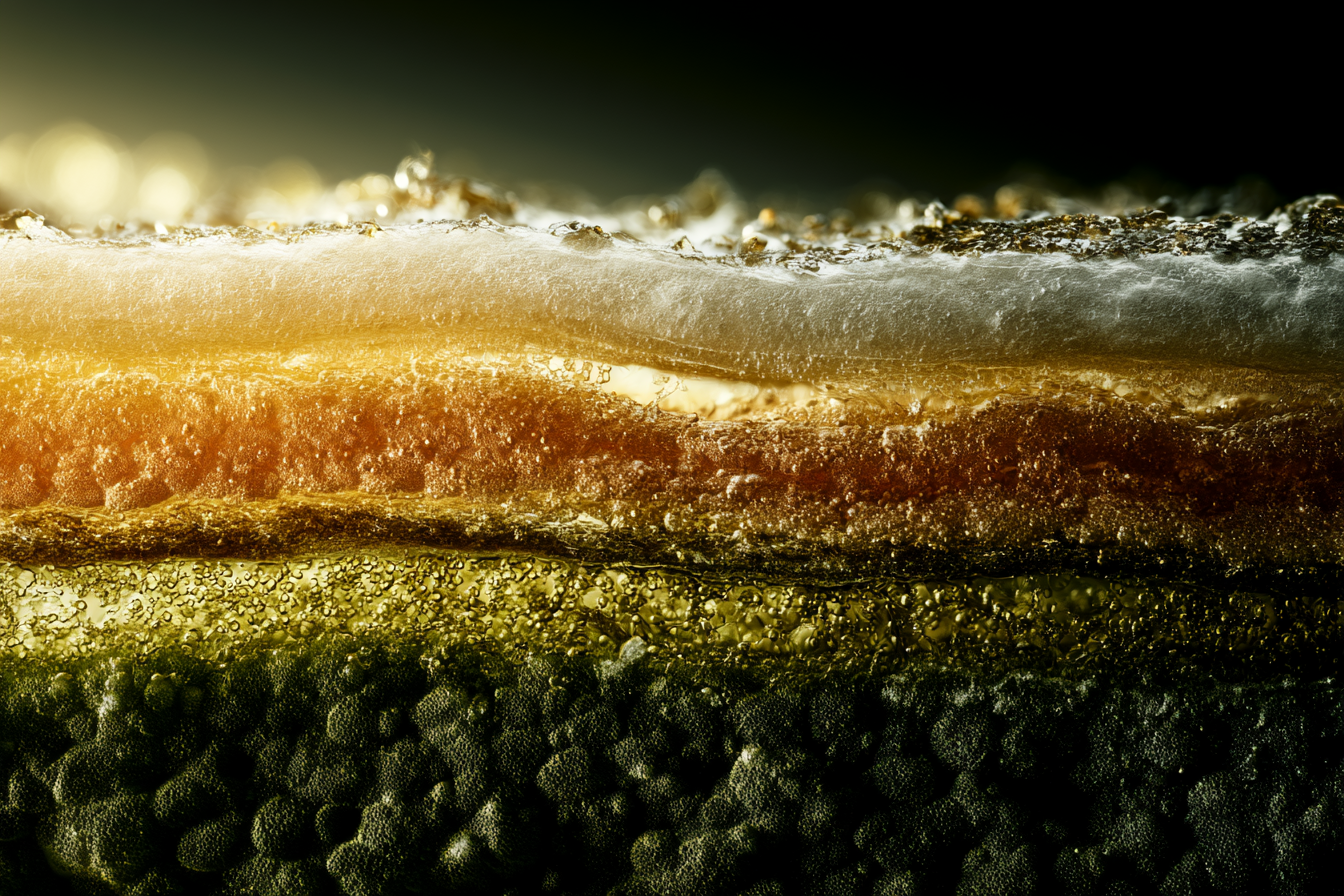
The outermost layer — the epidermis — is your barrier. It manages moisture loss and renews itself constantly. Below that is the dermis, which is where collagen, elastin, and the cells that produce them live. It’s the layer that gives skin its thickness and bounce. Beneath that is a layer of fat and connective tissue that provides cushioning and support.
Skin thinning isn’t happening in just one of these layers. It’s changes across all three arriving at once — and in midlife, they tend to accelerate together.
What’s actually driving it
Several things are happening simultaneously, and they compound each other.
Collagen loss. Collagen is what gives the dermis its structure and thickness. Production starts declining in our 30s, and then speeds up significantly around menopause. Research suggests collagen content can drop by as much as 30% in the first five years after estrogen levels fall. Less collagen means a physically thinner dermis.
Elastin breakdown. Elastin is what lets skin spring back after being stretched or moved. It degrades over time and doesn’t get replaced efficiently. The result is skin that feels less resilient and looks less taut.
Cellular energy decline. Skin cell renewal runs on energy — specifically on a molecule called ATP that powers almost everything cells do. As the cellular structures that produce ATP become less efficient with age, renewal slows, repair becomes harder, and the skin’s ability to maintain itself diminishes.
Lipid and barrier depletion. The skin barrier is held together by a precise mix of lipids — ceramides, cholesterol, and fatty acids. As these deplete, the barrier weakens. Moisture escapes more easily, and the skin becomes drier, more fragile, and harder to maintain.
Chronic low-grade inflammation. Researchers call this inflammaging — a persistent, quiet inflammatory state that builds with age. In skin, it gradually breaks down the structural proteins that maintain thickness and integrity.
Skin thinning isn’t one change. It’s the result of several biological processes converging — and in midlife, they tend to arrive together.
Why your body shows it first
Face skin and body skin are not the same, biologically. Face skin has more oil glands, which means more natural moisture support. It’s generally thicker in many areas, and it tends to receive more active care over a lifetime.
Body skin — particularly on the arms, chest, and décolletage — has fewer oil glands, thinner natural lipid coverage, and far less attention historically. When the biological shifts of midlife arrive, body skin has less in reserve.
The inner arms and chest are particularly telling. They have thinner skin to begin with, less underlying fat, and often significant accumulated sun exposure — all of which accelerate the effects. Crepiness, texture changes, and that papery quality that feels new are usually the first visible signs.
Body skin’s vulnerability in midlife isn’t a quirk. It’s biology — and one that has received far less scientific attention than the face.
What the research tells us
A landmark 2023 paper published in Cell — one of the most cited scientific journals in the world — identified twelve hallmarks of biological aging. Three of them show up directly in skin: mitochondrial dysfunction (cellular energy decline), chronic inflammation, and extracellular matrix disruption (the breakdown of the structural scaffold that maintains skin thickness).
These aren’t abstractions. They’re the mechanisms behind what you see in the mirror.
A companion paper published the same year in Aging and Disease applied this framework specifically to skin, reinforcing that energy decline, inflammaging, and barrier depletion are the primary drivers of how skin changes in midlife.
What this means for how you care for your skin
Understanding the cause changes what you look for. Hydration alone addresses only part of the picture. If the barrier is compromised, moisture escapes. If cellular energy is low, renewal slows. If chronic inflammation is breaking down the structural matrix, surface moisture doesn’t reach what’s actually changing underneath.
Skin that’s thinning needs support at multiple levels — ingredients that reinforce the lipid barrier, that support cellular energy pathways, and that address the inflammatory environment the skin is working within. The question isn’t just how to hydrate skin that’s thinning. It’s how to support the biological processes driving the change.
Formulated for midlife skin biology.
RYSNology · rysnology.com
RESEARCH REFERENCED IN THIS ARTICLE
López-Otín, C., et al. “Hallmarks of Aging: An Expanding Universe.” Cell, 2023.
Jin, M., et al. “Hallmarks of Skin Aging.” Aging and Disease, 2023.